Camping in the Southeast: What Humidity Actually Does to Your Trip
The desert asks what you brought. The Southern Appalachians ask what you can keep dry.
That is the whole difference, and almost every mistake people make camping in the Southeast comes from not taking it seriously. Campers arriving from Colorado or Utah pack for temperature and end up defeated by moisture. They bring a down bag, a mesh tent and a cotton hoodie, and then it rains for eleven hours at fifty-four degrees, and by morning they are colder than they have ever been at twenty below in a dry climate. The mountains here are green for a reason. That reason will be in your tent, in your sleeping bag, in your boots, and in your food bag, and how you plan around it determines whether the trip is one of the best you will take or one you quietly stop talking about.
This is a guide to the region as a system — the Southern Appalachians from north Georgia through the Carolinas and East Tennessee. It is not a list of campgrounds. It is the set of things the Southeast will do to you, and what each one changes about your kit.
Rain here is not an event. It is the baseline.
Great Smoky Mountains National Park receives roughly 55 inches of precipitation per year in the lowlands and about 85 inches per year at Kuwohi, the high point on the state line. For comparison, Seattle averages under 40. The high Southern Appalachians are, in rainfall terms, a temperate rainforest wearing a mountain's clothing, and the National Park Service says so plainly.
Crucially, that rain is not distributed the way a Pacific Northwest camper expects. It is not a grey week-long drizzle. Summer here works by convection: mornings are clear, heat and humidity build through the day, and thunderstorms fire in the afternoon — often violently, often over the ridge you are standing on. The Park Service notes that severe storms, including tornadoes, occur in the park, especially in spring and summer. Finish hiking early. Have camp set before three. Those are scheduling decisions, not gear decisions, and they cost nothing.
What it changes about your kit: a full-coverage rainfly that reaches close to the ground, a ground sheet, and a tent you can pitch fly-first if possible. A mesh-heavy "three-season" tent designed for the arid West will let wind-driven rain onto your sleeping bag. And a tarp pitched over the picnic table is the single highest-value item you can add — it turns a rained-out afternoon into a pleasant one. Browse our Tents & Shelter range with rainfly coverage in mind, not just peak height.
Wet cold is the actual danger. Not cold.
Hypothermia in the United States does not mostly happen at subzero temperatures. It happens between roughly 40 and 55 degrees Fahrenheit, in rain, to people who are wet and moving slowly and are not thinking about it. That temperature band describes a huge share of Southern Appalachian nights from October through May, and quite a few in summer at elevation.
Elevation is the multiplier. The Park Service states that temperatures can vary 10 to 20 degrees Fahrenheit from base to summit, and that clear skies lower down do not guarantee equally pleasant weather higher up. Mount Le Conte, at 6,593 feet, rarely exceeds 80°F even when Gatlinburg is in the nineties. That sounds like relief. It is also how people end up on a summit in shorts and a soaked cotton shirt with fog rolling in.
What it changes about your kit: no cotton, ever, above the trailhead. A synthetic or merino base layer, a fleece or synthetic mid layer, and a rain shell that is actually a shell and not a water-resistant windbreaker. Carry a warm layer even on a summer day hike if you are going high. And take your sleeping insulation seriously — a bag rated at the temperature you expect is not enough here, because a damp bag loses loft. Rate down about ten degrees from your expected low. Our Sleep & Comfort range is worth reading with that margin in mind.
Humidity attacks the gear, not only the camper.
This is the part almost no packing list mentions. In a dry climate you can hang a wet bag over the tent for an hour and it is done. In the Southeast, the air itself is close to saturated, so nothing air-dries on schedule. Gear that starts the trip damp will end it wetter.
Three practical consequences. First, down versus synthetic is a different calculation here than in the Rockies — down is lighter and packs smaller, but wet down is a wet rag, and it will not dry in a saturated valley. Treated down or synthetic fill is the more forgiving choice. Second, a dry bag for your sleep system is not optional weight; it is what keeps your one non-negotiable item functional. Third — the one that actually costs people gear — never pack a tent away wet. Mildew starts within about 48 hours, permanently marks the fly, and eventually delaminates it. Pitch it in the yard the day you get home.
You are camping in the densest black bear country in the United States.
The Park Service estimates roughly 1,900 bears in Great Smoky Mountains National Park, a density of approximately two bears per square mile, and describes it as the densest population of black bears in the country. Bear activity is especially high from May through August. This is not a wilderness abstraction — it is a nightly campground reality across the region.
The rules that matter: willfully approaching within 50 yards, or any distance that disturbs or displaces a bear, is illegal in the park. In the backcountry, use the installed food storage cables for food, garbage and scented items. Lock vehicles — the Park Service publishes a photograph of a car window shattered by a bear that had learned there was food inside. Never burn trash in a fire ring; the lingering scent works as a lure long after you have gone to sleep.
And the encounter protocol, verbatim in substance: never approach a bear or let it close the distance. If its behaviour changes because of you, back away slowly while facing it, and never run. If it follows, change direction; if it keeps following, stand your ground. Running triggers pursuit.
What it changes about your kit: hard-sided, sealable food storage rather than a soft cooler bag left on the table, odour-control bags for trash, and the discipline of cooking and eating away from where you sleep. Our Camp Kitchen range is where the sealable containers and pack-out systems live.
Ticks are the region's most under-discussed injury.
Nobody plans a trip around them and a meaningful number of people come home with a problem. The Southeast is the national epicentre of the lone star tick, and the lone star tick is the species most often associated with alpha-gal syndrome — a serious, potentially life-threatening allergy to mammalian meat triggered by a tick bite. The CDC identified more than 110,000 suspected cases between 2010 and 2022 and estimates as many as 450,000 people may be affected, noting that most reported US cases occur in Southern, Eastern and Central states. Lyme disease and several other tick-borne illnesses are also present and, per public health reporting, seasons have been starting earlier.
What it changes about your kit: permethrin treatment on clothing, tent, and gaiters — applied at home, dried fully, effective through several washes. Repellent with a known active ingredient on skin. Long pants tucked into socks when you are moving through grass or leaf litter, which looks ridiculous and works. And a genuine full-body tick check every single evening, including scalp, waistband, behind the knees, and armpits. A fine-tipped tweezer weighs nothing and belongs in your first-aid kit. Our Camp Essentials range covers the small items this section depends on.
The firewood rule is not bureaucracy.
In Great Smoky Mountains National Park, only heat-treated firewood that is bundled and certified by the United States Department of Agriculture or a state department of agriculture may be brought into the park. Similar rules apply across the Southeast, and quarantine boundaries change.
The reason is the emerald ash borer and its relatives, which travel inside firewood and have already reshaped forests in this region. Carrying a bundle from home is how you personally move an invasive insect a hundred miles in an afternoon. The practical version: burn dead-and-down wood collected in the park where that is permitted, or buy certified heat-treated wood locally — concessioners at several campgrounds sell it during their operating season, roughly March through November. Do not bring wood across a state line. Do not bring wood you split yourself.
Hurricane remnants are a mountain problem, not just a coastal one.
The Atlantic hurricane season runs June 1 to November 30. NOAA's outlook for 2026 calls for a below-normal season — 8 to 14 named storms, of which 3 to 6 become hurricanes and 1 to 3 become major hurricanes, at 70 percent confidence.
"Below normal" is a reasonable thing to feel relieved about and a terrible thing to plan around. The mountain-camping risk from a tropical system is not wind; it is a decaying storm parking over steep terrain and dropping an extraordinary amount of rain on ground that cannot absorb it. That is an inland flooding and road-closure problem that reaches well into the Carolinas and Tennessee, and the region has learned this the hard way in recent years. If you have a trip planned in September or October, check the National Hurricane Center outlook in the week before you leave, and have a backup region. A below-normal season still only takes one.
The season is inverted here too — just differently than in the desert.
In the desert, summer is the season to avoid. In the Southeast, summer is merely the least pleasant: hot, humid, buggy, thunderstorm-prone, and busiest. It is still perfectly good camping at elevation, and it is the only season for swimming holes.
Autumn is the region's answer to everything. The Park Service calls September through mid-November the driest season, with warm days and cool nights. Foliage climbs down the mountain over several weeks, so there is no single peak weekend — high elevations turn in early October and the valleys hold on into early November. Bugs collapse. Humidity drops. This is when the Southeast is unambiguously one of the best camping regions in the country, and it is also when campground reservations are hardest to get, which is the tradeoff.
Spring is a gamble with a very high payoff. Wildflowers in the Smokies are genuinely world-class, and the crowds have not arrived. But March can deliver snow at elevation, April brings over four inches of rain, and conditions change fast. Go in spring with the wet-cold kit above and you will have a wonderful time. Go with a summer kit and you will be miserable.
Winter is quietly excellent for people who own the right sleeping bag. Cades Cove and Smokemont stay open year-round. Snow is common at high elevations — up to two feet is possible — and January and February are the snowiest months, but the valleys are moderate. You will have the place to yourself.
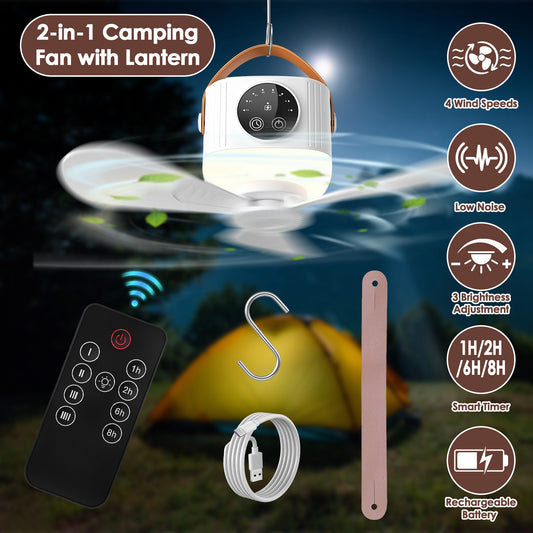
Long, dark autumn and winter evenings also make lighting a bigger deal in this region than in the desert, where you are mostly outside. Our Light & Power range is worth a look if your current setup is a phone torch.
Costs to budget for in 2026
Southeast camping is inexpensive by national-park standards, but the fee structures are unusual and catch people out.
Great Smoky Mountains National Park charges no traditional entrance fee. It does require a parking tag for any vehicle parked longer than 15 minutes: $5 daily, $15 weekly, $40 annual, sold on Recreation.gov, at smokieslife.org, at in-park machines and at visitor facilities. Frontcountry campsites are $30 per night at the standard campgrounds, with Look Rock electric sites at $36. Group camps run from $30 to $94 depending on site and pavilion. Backcountry camping is $8 per person per night, and as of April 30, 2026 there is also a $6 non-refundable fee per permit, with the previous $40 permit cap eliminated; the Appalachian Trail thru-hiker pass moved from $40 to $44.50. Certified firewood is typically a few dollars a bundle. Budget separately for a permethrin treatment kit, which is a one-time cost that lasts a season.
The short version
Bring a tent with real rainfly coverage and a tarp for the table. Assume the forecast is wrong above 4,000 feet. Treat 45°F and raining as more dangerous than 20°F and clear, because it is. Keep your sleep system in a dry bag and never store a tent wet. Store food as if there are two bears per square mile, because there are. Check for ticks every evening without exception. Buy firewood locally and certified. Watch the tropics from September. And if you can only go once, go in October.
Last updated: July 2026. Fees, permit systems and seasonal openings change — confirm current details with the National Park Service and Recreation.gov before you travel. Nothing here is a substitute for a current forecast.