Desert Southwest Camping: What the Desert Actually Asks of You
The desert is not a harder version of ordinary camping. It is a different problem. In the mountains, what ruins a trip is usually weather you can see coming. In the Desert Southwest, the things that ruin trips are invisible: water that wasn't at the campground after all, a storm forty miles away that fills the wash you parked in, and a fire restriction that quietly made your cook kit illegal three weeks before you arrived.
This guide covers southern Utah, Arizona, southern Nevada and western New Mexico, organised around what the desert asks of you — roughly in the order it will bite you. Every figure comes from the Park Service, the BLM, the National Weather Service or the USGS, and we've noted which agency said what, because they don't always agree.
1. The season is inverted, and the numbers explain why
In most of the country, summer is camping season. Here it is the off-season, and the parks say so: NPS calls spring (April–May) and fall (mid-September–October) "the temperate — and most popular — seasons" at Arches and Canyonlands, with highs of 60–80°F and lows of 30–50°F.
Summer is a different climate entirely. NPS-published averages put July's average high at Arches at exactly 100°F, with sixteen days above 100°F and a record of 116°F. Phoenix's July normal high is 106.5°F with a normal low of 84.5°F (NWS Phoenix, 1991–2020) — its coolest July night is hotter than a warm afternoon almost anywhere else.
Winter at low elevation is underrated, though Arches and Canyonlands both report lows of 0–20°F, and NPS warns that "even small amounts of snow or ice can make local trails and roads impassable." The number that catches people out is the daily swing. NPS describes Colorado Plateau temperature changes of "sometimes over 40 degrees in a single day." An 85°F October afternoon is a 42°F night. Campers pack for the afternoon they experienced and shiver through the night that followed. Choose your sleeping bag for the low, not the high.
2. Water is the entire plan — and filtering is not always enough
How much. NPS and BLM converge on one headline number across the region: at least a gallon (about 4 litres) per person per day. Arches, Death Valley, Zion and BLM Moab all publish it. The Arches and Canyonlands safety pages add a per-hike figure — 2–3 litres for front-country hikes, 4 or more for backcountry. That isn't a contradiction; it's "drink per day" versus "carry per outing." Plan for both.
Whether it will be there. This is where desert trips fail. Assume nothing:
- NPS states that "potable water is non-existent in most of Joshua Tree National Park" — six of the park's eight campgrounds have none.
- BLM Moab is blunt about its whole system: "No water or electricity is available in campgrounds" — dozens of sites along UT-128, UT-313, Kane Creek and Potash Road, all dry.
- Willow Flat, the campground at Canyonlands' Island in the Sky, has no water.
- Grand Canyon's North Rim has no potable water anywhere for the entire 2026 season.
- Dead Horse Point State Park has no well and no natural source — it trucks water in daily, and offers no RV fills at all.
So desert camping is a water-hauling exercise. Two people on a four-night trip need roughly eight gallons before cooking and washing — a storage problem, not a filtration problem. Containers matter as much as the stove here.
Whether it can be treated. Here is the part most camping articles get wrong: a filter alone is not the region's official standard. NPS guidance for Colorado River water at Canyonlands requires two steps — clear the sediment first (settle overnight, or use about a teaspoon of alum per five gallons), then either boil for one minute plus a minute per 1,000 feet of elevation (five minutes at Canyonlands elevations) or use an "absolute" 1-micron filter meeting ANSI/NSF Standard 53 for cyst removal and then chemically disinfect. Filtration alone is not on the approved list.
Elsewhere the problem is chemical and no filter helps at all. Zion has warned about cyanobacteria and anatoxin-a in the North Fork of the Virgin River, stating flatly that "no known filtration methods are effective at reducing toxin levels for safe drinking." A USGS survey of 230 groundwater sites in the Grand Canyon region found about 12% exceeding the EPA's arsenic limit, from entirely natural geothermal sources.
Carry a filter anyway — just as a supplement to the water you brought, not a substitute.
3. The monsoon: small storms, disproportionate consequences
The Southwest monsoon isn't steady rain. It's short, violent, extremely local storms — and the danger is almost never where the rain falls.
Timing depends on who you ask. NWS Tucson defines the monsoon as June 15 – September 30; NWS Grand Junction, covering eastern Utah, says it "generally begins around the second week of July" and can run "as late as October." Use the office that covers your destination.
The threshold is lower than people assume: NPS notes that less than half an inch of rain in an hour can produce a flash flood. Zion has documented walls of water twelve feet or higher arriving "within minutes or even seconds," "often caused by storms miles away," sometimes "with sunny skies overhead." Two feet of water will carry away most vehicles (NWS Grand Junction); six inches will knock an adult off their feet (NPS).
Three rules follow, and they're worth treating as non-negotiable:
- Never camp or park in or beside a wash, however dry. Flat sandy ground in the desert is flat and sandy because water made it that way.
- Do slot canyons in the morning, and check the forecast for the whole upstream catchment, not just your trailhead.
- If a flood starts, move to high ground without collecting your gear. That's the explicit NPS instruction. Rock overhangs and shallow caves are specifically named as unsafe shelter.
Lightning follows the same logic: NPS notes strikes can occur up to 60 miles from the nearest rainfall, and to wait 30 minutes after the last thunder before returning to exposed ground.
4. Fire restrictions will rewrite your cook kit
If you take one thing from this guide, take this. Fire restrictions here aren't a rare emergency measure — they're the normal summer condition, and Stage 2 bans campfires even in permanent fire rings inside developed campgrounds. In 2026, Stage 2 took effect at 12:01 a.m. on June 26 across all BLM land in Utah and across Arches, Canyonlands, Hovenweep and Natural Bridges, "until rescinded." Zion went to Stage 2 on May 22; Grand Canyon's North Rim is under Stage 2 all season.
Under Stage 2, agencies prohibit open fires of any kind — including fires in an established fire pit — plus charcoal grills, pellet grills, any ash-producing fuel, and smoking outside an enclosed vehicle. What stays permitted is narrow: shielded petroleum or liquid-petroleum-gas stoves with a shut-off valve, used on ground cleared of flammable vegetation for at least three feet in every direction.
Read that exemption carefully, because it's written around a valve. A canister or liquid-fuel stove you can shut off instantly qualifies. Alcohol stoves, solid-fuel tablets and wood-burning backpacking stoves don't. A cook plan built around a campfire or a bag of briquettes simply doesn't function here for most of the year, and a valved gas stove is the only method that stays legal through a Stage 2 order across NPS, Forest Service and BLM land alike.
The penalties aren't nominal — BLM Utah's fire prevention orders cite 18 U.S.C. 3571, up to $100,000 and/or twelve months imprisonment, plus full restitution for suppression costs, which in practice is the frightening part. Restrictions change through the season, sometimes weekly. Check before every trip: utahfireinfo.gov, dffm.az.gov/fire-restrictions, nmfireinfo.com.
5. Shade is something you bring
No federal rule tells desert campers to carry shade, but the parks make the point themselves. NPS describes most sites at Death Valley's Furnace Creek Campground as unshaded, calls South Kaibab's shade "minimal," and the Tonto Trail's "very limited." Grand Canyon's guidance is in capital letters: "AVOID HIKING BETWEEN 10 AM AND 4 PM." Arches and Canyonlands say the same in gentler words, asking visitors to avoid 10 a.m.–4 p.m. "when the sun is strongest."
It isn't universal — Canyonlands built shade structures at Willow Flat, and Devils Garden Campground sits in juniper and pinyon. But assume a bare site under open sky. A shade sail or tarp turns an unusable midday campsite into a usable one, and where the official advice is to stop moving for six hours a day, that isn't a luxury.
6. The payoff: some of the darkest skies on Earth
The conditions that make the desert hostile at noon make it extraordinary at night. Canyonlands has been a Gold-Tier International Dark Sky Park since 2015; Arches was certified Silver Tier in 2019; Dead Horse Point became Utah's first certified state park in 2016; Natural Bridges was the world's first Dark Sky Park, in 2007. Announcing Moab's certification in June 2024, DarkSky International called the region "the densest area of Dark Sky Places in the world."
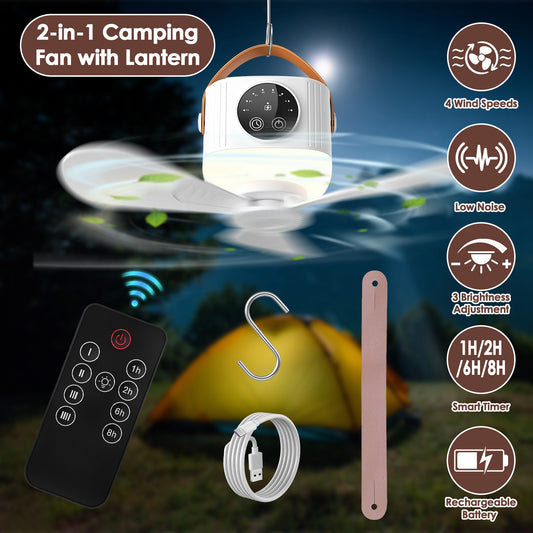
Two practical notes. Red-light mode matters more here than anywhere, because white light destroys your night adaptation and everyone else's — worth choosing lighting that has one. And check the moon phase before booking dates: a full moon over slickrock is bright enough to hike by, and bright enough to wash the Milky Way out completely.
7. Where you're actually allowed to sleep
Dispersed camping on BLM land is one of the great features of the Southwest, and the rules vary by field office. The general standard is a 14-day limit within a 28-consecutive-day period, at no fee; after that you relocate — at least 25 miles in BLM Nevada, at least 30 around Moab. BLM Utah adds that dispersed campers must use previously disturbed sites only, may not level, trench or dig, must use an existing fire ring or a fire pan, and may collect only dead and down wood where wood fires are allowed at all.
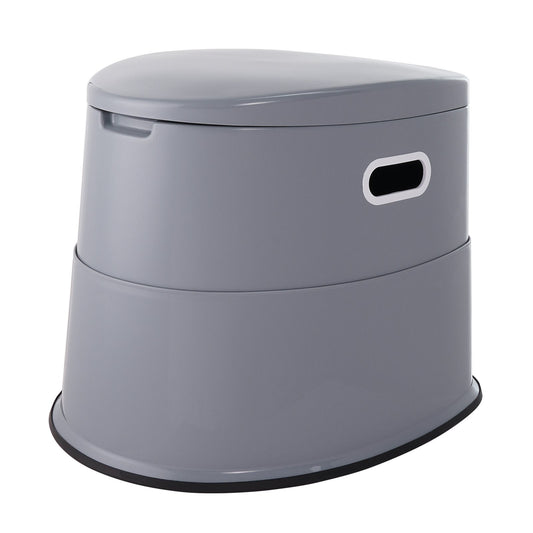
Grand County, Utah goes further than anywhere else, and this catches people out: a portable toilet system or human waste disposal bag is required for all dispersed camping. It's codified, not advisory, and used bags go to the Moab Transfer Station on Highway 191 — explicitly not into BLM dumpsters.
The long-stay exception is the Long Term Visitor Area system in Arizona and southeastern California. At La Posa near Quartzsite, a $180 permit covers continuous camping from September 15 to April 15 — seven months — with a $40 option for fourteen consecutive days.
8. Wildlife, soil, and the two habits that matter
The desert's reputation outruns its statistics. The CDC records 7,000–8,000 venomous snakebites a year in the US and about five deaths. NPS notes that most rattlesnake bites are "illegitimate" — the result of handling or provoking the snake — and that roughly 25% inject no venom at all. Arches and Canyonlands ask visitors to give snakes at least 75 feet.
Prevention is almost entirely behavioural, and comes down to one habit: shake things out. Boots, clothing left outside, bedding rolled back before you get in. Wear footwear after dark, and don't reach blindly into cracks or under rocks — both parks call this out for scramblers.
The second habit is where you put your feet. The dark, crumbly soil between desert plants is alive; NPS calls biological soil crust "a living soil that creates a crust over the landscape," and it holds the desert together, retains water and fixes nitrogen for every plant around it. "Even a single footprint can kill the soil crust immediately below." A thin veneer may return in five to seven years, a mature crust can take fifty, lichens and mosses hundreds. Stay on trails and roads; where no trail exists, walk in sandy washes or on bare rock.
Costs to budget for in 2026
Entrance fees for a private vehicle, seven days: Arches, Canyonlands, Joshua Tree and Death Valley $30; Zion and Bryce Canyon $35. The America the Beautiful annual pass is $80. One 2026 change: fee-free days are now limited to US residents, with photo ID required.
The short version
Go in spring or fall. Carry a gallon of water per person per day and treat every campground as dry until proven otherwise. Never park or sleep in a wash. Bring a valved gas stove and assume campfires are banned. Bring your own shade. Pack for a night 40 degrees colder than the afternoon. Shake out your boots. Stay on the rock.
None of that is difficult. It's just different from what works in the Rockies or the Northeast — and the desert is unforgiving of people who arrive with the wrong mental model. Get the model right and the Southwest is the best camping in the country.
Last updated: July 2026. Fees, fire restrictions, reservation systems and water availability here change frequently, sometimes within a season — Stage 2 orders in particular can be issued or lifted with little notice. Always confirm current conditions with the managing agency before you travel: nps.gov, blm.gov, and the state fire portals linked above.