Camping in Great Smoky Mountains: Parking Tags, Bears and the 2026 Permit Changes
Great Smoky Mountains is the most-visited national park in the United States by a very wide margin, and it is also the one people most often assume they understand. It has no entrance fee, no timed entry, and no reservation gate at the boundary. You can drive in at any hour. That combination produces a specific kind of trip-ruining surprise, because "free to enter" and "no planning required" are not the same sentence.
Here is what actually governs a camping trip here in 2026.
There is no entrance fee. There is a parking tag, and it is enforced.
Since the Park It Forward programme began, every vehicle parked in the park for longer than 15 minutes needs a parking tag displayed. Not a permit, not an entry pass — a tag, per vehicle. The rates are $5 daily, $15 weekly, and $40 annual.
You can buy them on Recreation.gov and print at home, from smokieslife.org for annual tags, from machines placed around the park, and in person at visitor facilities. If you are staying more than three days, the weekly tag is already cheaper than dailies, and if you will visit twice this year the annual pays for itself. Note that your America the Beautiful pass does not substitute for a parking tag — this catches a lot of people, because it is exactly the situation those passes normally cover. The park honours federal Free Entrance Days, of which there are eight in 2026, and parking tags are not required on those dates.
What changed for 2026
Two things, both in the backcountry system, both effective April 30, 2026.
First, the fee structure. The per-night rate is unchanged at $8 per person per night, but there is now a $6 non-refundable fee per permit on top, and the old $40 cap on a single permit has been eliminated. For a couple doing three nights, that is a modest addition. For a long trip, the removal of the cap is the meaningful change — a seven-night solo trip that used to top out at $40 now costs $56 plus the $6 permit fee. The Appalachian Trail thru-hiker pass moved from $40 to $44.50 for up to eight days and seven nights.
Second, the system itself. Backcountry permit reservations are moving to Recreation.gov, which the park says is for reliability, security and customer support. Permits issued before the switch remain valid. If you have used the old park-run backcountry site before, do not assume your login or your saved itineraries carry over — check before your reservation window opens rather than at 10am on the day.
The ten campgrounds, and how to pick one
The park maintains developed frontcountry campgrounds at ten locations. Standard sites are $30 per night everywhere except Look Rock electric sites, which are $36. Reservations go through Recreation.gov or 877-444-6777.
The single most important fact: none of the frontcountry campgrounds have showers, and none have hookups. They have flush toilets and cold running water, a fire grate and a picnic table per site. That is it. People book a $30 national park site in the most-visited park in America and arrive expecting a shower house. Plan for a pop-up shower tent with a solar bag, a bath-house detour into Gatlinburg or Cherokee, or four days of wet wipes and acceptance.
Only Cades Cove and Smokemont are open year-round; every other campground is seasonal. Cades Cove is the one everybody wants — around 160 sites, an open valley with the park's best wildlife viewing and its worst traffic, with a camp store and bike rentals in season. Smokemont, on the North Carolina side near Cherokee, is quieter and rarely as hard to book. Elkmont is the largest and the most central to the Gatlinburg side, and it is the firefly campground, which makes late May a completely different booking problem. Cosby and Cataloochee are the ones to look at when everything else is full — Cataloochee in particular is remote, reached by a slow gravel road, and has an elk herd.
Group camps run $30 to $94 depending on the site and whether a pavilion is included. There are horse camps at $30 to $36.
The firefly lottery is a separate event with its own calendar
Elkmont's synchronous fireflies are one of the genuinely unique wildlife spectacles in North America, and access is by lottery. In 2026 the viewing dates were May 20–27. The lottery opened at 10am EDT on April 24 and closed at 11:59pm EDT on April 27, with a $1 application fee and a $29 reservation fee if selected.
There are 120 vehicle reservations per night, 960 for the entire event, and each covers one vehicle with up to seven occupants. After noon on event days, only vehicles with reservations and registered campground guests are allowed into the Elkmont area. If this is the trip you want, the calendar item to set is not the viewing week — it is the late-April lottery window, roughly a month earlier.
Plan the weather by elevation, not by the town forecast
The Gatlinburg forecast is close to useless for a high-elevation night. The park sees roughly 55 inches of precipitation a year in the lowlands and about 85 inches at Kuwohi. Temperatures vary 10 to 20 degrees from base to summit, and the Park Service warns directly that clear skies lower down do not guarantee equally pleasant weather higher up.
Practically: autumn from September to mid-November is the driest season and the best camping, with the caveat that foliage weekends book out months ahead. Spring is beautiful, wildflower-rich and volatile — snow is possible in March at elevation and April brings over four inches of rain. Summer is hot and humid below, pleasant at height, and reliably thunderstormy in the afternoon. Winter brings up to two feet of snow at elevation with January and February the snowiest, while the valleys stay moderate and nearly empty.
Bears, firewood, and the two rules with legal teeth
Roughly 1,900 black bears live in the park — about two per square mile, the densest population in the country. Activity peaks May through August. Willfully approaching within 50 yards, or any distance that disturbs or displaces a bear, is illegal. In the backcountry, use the installed food storage cables. In the frontcountry, use the provided storage and lock your vehicle; the park publishes a photo of a car window a bear broke to reach food inside. Never burn trash in a fire ring — the scent lingers and works as bait overnight.
The firewood rule is the other one with real enforcement behind it: only heat-treated firewood bundled and certified by the USDA or a state department of agriculture may be brought into the park. Concessioners at several campgrounds sell certified wood during their operating season, roughly March through November. Otherwise, collect dead and down wood inside the park where permitted. Do not bring a bundle from home.
Two more rules worth knowing before you arrive: quiet hours are 10:00pm to 6:00am, generator hours are 8:00pm to 8:00am, and camping is limited to 14 consecutive days and no more than 60 total days in a calendar year.
Smokies-specific notes for your kit
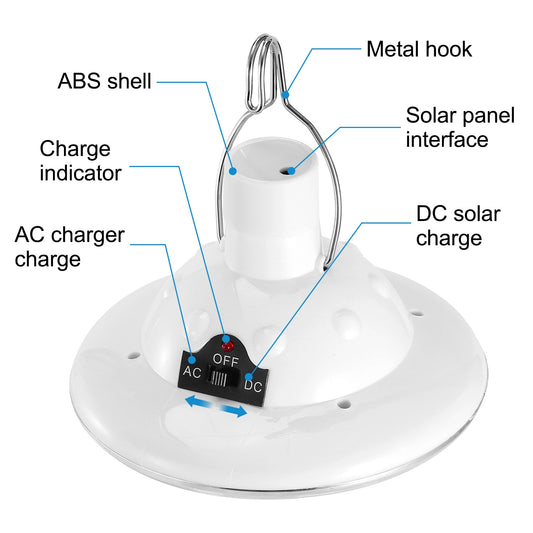
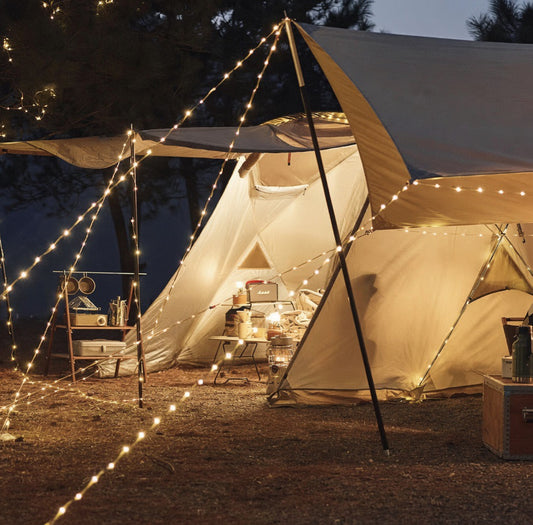
A waterproof tarp over the picnic table changes an entire trip here more than any other single item. A rainfly with genuine coverage matters more than tent weight — see our Tents & Shelter range. Keep your sleeping bag in a dry bag, and rate it about ten degrees colder than you expect, because damp insulation underperforms; our Sleep & Comfort range is the place to start. Bring a synthetic mid layer and leave cotton in the car. Permethrin-treat your clothing before you leave home and do a tick check every evening — this is lone star tick country. Sealable hard-sided food containers beat a soft cooler on the table, which is a Camp Kitchen decision. And bring a real lantern or headlamp from our Light & Power range, because the tree canopy makes it dark early and dark completely.
Last updated: July 2026. Fees, lottery dates, permit systems and campground seasons change — confirm current details with the National Park Service and Recreation.gov before you travel.