Camping in Moab: Arches, Canyonlands and Everything Between
Moab is the easiest desert basecamp in America, and one of the hardest places to get a campsite. Two national parks sit within an hour of a town of five thousand people, with a state park, a 9,000-acre recreation area and dozens of BLM campgrounds filling the gaps. Arches drew nearly 1.5 million visitors in 2024 and Canyonlands over 818,000, and almost all of them came through the same handful of roads.
This guide is about the logistics — where you can actually sleep, what water exists, and what changed in 2026. For the underlying skills the desert demands, start with our Desert Southwest camping guide.
What changed for 2026
Arches no longer requires timed entry. On 18 February 2026 the Park Service announced that the timed-entry reservation pilot would not return. You can now drive up without booking a slot. But the entrance fee still applies, and the park is candid that when the lots fill, "temporary delays may last three to five hours." Trading a reservation system for a queue is not the same as trading it for open road.
Two reservations survived. Devils Garden Campground and the Fiery Furnace still require them, independently of park entry.
Stage 2 fire restrictions are in force. They took effect at 12:01 a.m. on 26 June 2026 across Arches, Canyonlands, Hovenweep and Natural Bridges, and across all BLM land in Utah, "until rescinded." This is the detail most Moab articles get backwards: Stage 2 closes the fire rings at Devils Garden — the ones that permit campfires in a normal season. Charcoal and pellet grills are out too. A valved gas stove is what stays legal.
Grand View Point is under construction. From 27 July to 1 October 2026, the overlook, its trail and 0.3 miles of road close weekly from Monday 6 a.m. through Thursday 4 p.m. — to vehicles, bikes and pedestrians alike. Island in the Sky's signature viewpoint is a Friday-to-Sunday proposition this autumn.
The Needles District burned, and has reopened. The lightning-caused Babylon Fire started on 26 June 2026 in the Dark Canyon Wilderness, forced the evacuation of the Needles on 28 June, and covered 107,189 acres. The district reopened on 18 July, though Elephant Hill, Lavender and Davis Canyon Roads stayed closed to vehicles and bicycles, with more areas due to follow "over the next few weeks." If the Needles is the reason for your trip, check the park's conditions page before you commit — post-fire closures move week to week, and burned drainages carry raised flash-flood risk for years.
Where to sleep, hardest to easiest
Devils Garden, Arches — 51 sites, $25. The only campground inside Arches, in juniper and pinyon, with flush toilets and drinking water. Reservations are required from 1 March to 31 October, open six months ahead, and NPS says it is "usually full every night." First-come Scan & Pay runs 1 November to 28 February — the realistic window for anyone who didn't plan half a year out. Stay limits are seven days a month and fourteen a year. No hookups, no dump station, no showers.
Willow Flat, Island in the Sky — 12 sites, $15. Twelve sites, first-come only, year-round, and it "fills quickly spring through fall." Vault toilets, shade structures, 28-foot vehicle limit, and no water. Arrive with everything you'll drink.
The Needles Campground — $20. Loop A is first-come year-round; Loop B's individual sites are reservable from mid-March to mid-November. Drinking water and flush toilets, 28-foot combined length limit. It is roughly 75 miles from Moab — 40 south on US 191, then 35 west on UT 211 — and there is no cell coverage in the district at all. See the Babylon Fire note above before booking.
Dead Horse Point State Park. Kayenta's 21 sites all have 20/30/50-amp hookups and stay open to 30 November; Wingate's 31 sites (20 electric, 11 hike-in tent-only) run year-round and take RVs to 56 feet. RV sites are $60 in peak season — March to June, September to October — and $50 otherwise; hike-in tent sites $45 and $40. Yurts sleep six at $150 plus tax, dropping to $100 in the deep summer and winter windows; bedding isn't included. Book through Reserve America on a four-month rolling window. The park has no well and no natural water source: everything is trucked in daily, and there are no RV fills anywhere on site.
BLM campgrounds — $20, or $25 at Horsethief. This is Moab's real capacity, and it's badly underused by visitors who only look at recreation.gov. Vault toilets, fire rings, picnic tables and dumpsters at all of them; no water or electricity at any of them. Most individual sites are first-come, so they reward arriving on a weekday. The clusters worth knowing: UT-128 along the Colorado River has twelve campgrounds, including Big Bend's 33 sites and Goose Island's 19 just outside town; UT-313 has Horsethief's 83; Kane Creek has the five Ledges loops, 98 sites between them; and Ken's Lake south of town has 48 reservable sites in Loop A.
Sand Flats Recreation Area. Grand County and the BLM jointly run 9,000 acres above town, with 140 first-come sites and six group sites at $20 a night per vehicle. Day use is $10 per private vehicle for seven days, or $35 annually. It's minutes from Moab and next to Slickrock, which is the appeal and also the noise.
Dispersed camping is free but far more regulated here than newcomers expect. A 2016 supplementary rule closed non-designated camping within half a mile of Highway 313, the Island in the Sky entrance road, the Gemini Bridges and Kane Springs Creek Canyon Rim routes, plus Long Canyon, the 191 corridor near Arches, the Green River shoreline, Castle Rock, the Potash Trail, Spanish Valley and Mill Creek Canyon. What's left must be a site "previously disturbed by camping activities." Fourteen days maximum, then relocate at least thirty miles.
The rule almost nobody arrives knowing
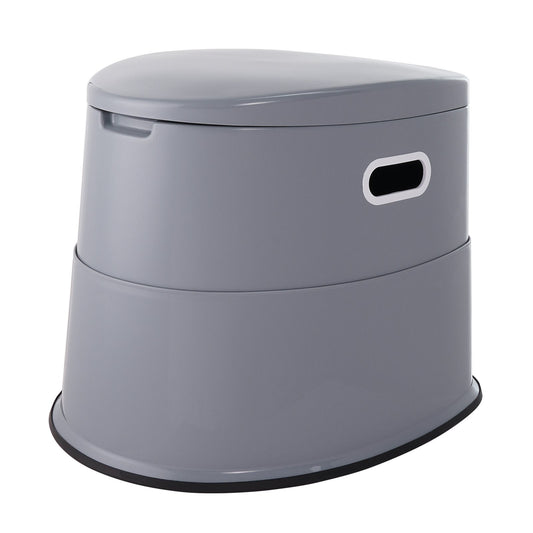
Throughout Grand County, a portable toilet system or human waste disposal bag is legally required for all dispersed camping where no toilet is available. Not encouraged — required, and codified. Used bags go to the Moab Transfer Station at 2295 S Highway 191, not into the dumpsters at BLM campgrounds. If you're planning to camp free on BLM land around Moab, a portable toilet is something you have to bring, in the same category as your tent.
Water: the actual map
Potable water exists at the Arches Visitor Center and Devils Garden Campground year-round, seasonally at the Devils Garden Trailhead, at both Canyonlands visitor centers, at the Needles Campground in season, and at Dead Horse Point. It does not exist at Willow Flat, at any BLM campground, or anywhere in the Maze. Plan on a gallon per person per day.
When to go
April–May and mid-September–October, without much argument. NPS-published averages for Arches give April 71/42°F, May 82/51, September 88/55 and October 74/42. July averages 100°F with sixteen days above the century mark. October is also the wettest month at 1.18 inches, and the monsoon — which NWS Grand Junction says usually begins around the second week of July — can run into it. Winter is genuinely good: quiet, cold, and Devils Garden goes first-come.
Whatever month you choose, enter the parks before 8 a.m. or after 3 p.m. From March through October, entrance waits at Arches can exceed sixty minutes, and in summer many trailhead lots fill by 7:30 a.m. Devils Garden has 160 spaces, Wolfe Ranch 157, The Windows 92. Neither park runs a shuttle.
Moab-specific notes for your kit
The Fiery Furnace requires gripping soles — NPS says no sandals — and a minimum of one quart of water per person. Ranger tours are $16 and open only seven days ahead. In late spring and early summer, swarms of biting gnats appear in the pinyon-juniper country for roughly three weeks; NPS recommends long sleeves, long trousers and citronella. And if you're buying passes, the $55 Canyonlands annual pass also covers Arches, Natural Bridges and Hovenweep for US residents — better value than two $30 entries.
Finally, the reason to stay out after dark. Canyonlands is a Gold-Tier International Dark Sky Park, Arches is Silver Tier, Dead Horse Point was Utah's first certified state park, and Moab and Castle Valley were both certified Dark Sky Communities in 2024. Bring a headlamp — red mode if yours has one, since it preserves night vision — and a chair you'll actually sit in for an hour. Note that Dead Horse Point closes to day-use visitors at 10 p.m. — only campers and permit holders stay past then.
If the canyon country appeals and you want a harder, wetter counterpart to all this dry rock, our Havasupai Falls guide covers the other side of the Colorado Plateau.
Last updated: July 2026. Fees, closures, fire restrictions and reservation windows around Moab change frequently — Stage 2 orders and post-fire closures in particular can shift with little notice. Confirm with nps.gov, blm.gov and stateparks.utah.gov before you travel.